
Why Your Chimney Leaks When It Rains
· 5 min read · Keystone Chimney Repair
A chimney leak almost always gets blamed on the roof first. Roofers get called, shingles get replaced, and the ceiling stains come back with the next hard rain. Here are the five things actually causing it, roughly in the order we find them.
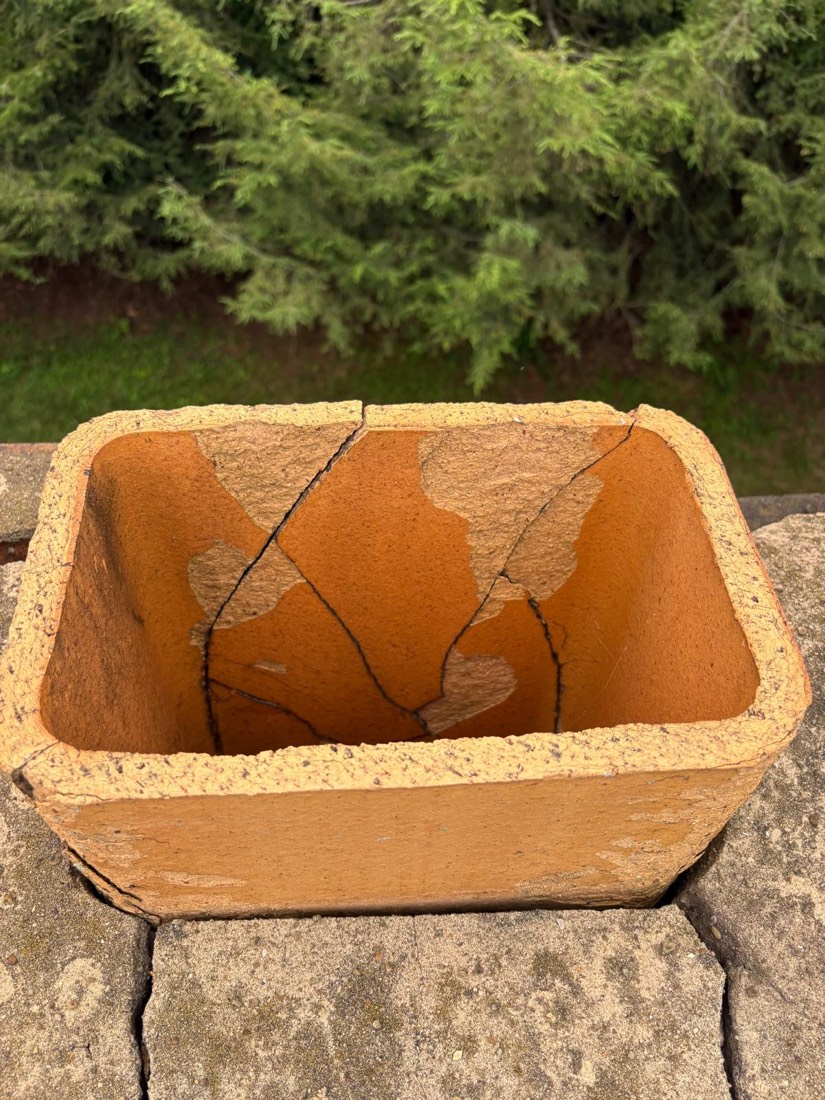
1. There is no cap on the flue
The simplest cause and the most common one we find. An open flue is a hole in the top of your house, several inches across, pointed straight up at the sky.
Rain falls directly down it into the smoke chamber and firebox. Animals get in the same way. A stainless cap solves both and is the cheapest fix on this list by a wide margin.
How to check: look at the top of the chimney from the ground. If you can see the opening, there is no cap.
2. The crown is cracked
The crown is the concrete surface across the top. When it cracks, water runs into the gap between the flue liner and the brick, which is the worst place for it to go because nothing there is designed to get wet.
This is the leak that soaks the chimney from the inside out and shows up as damp walls a floor below.
How to check: cracks are usually visible from a roof or in photos. This is one you need someone to look at properly.
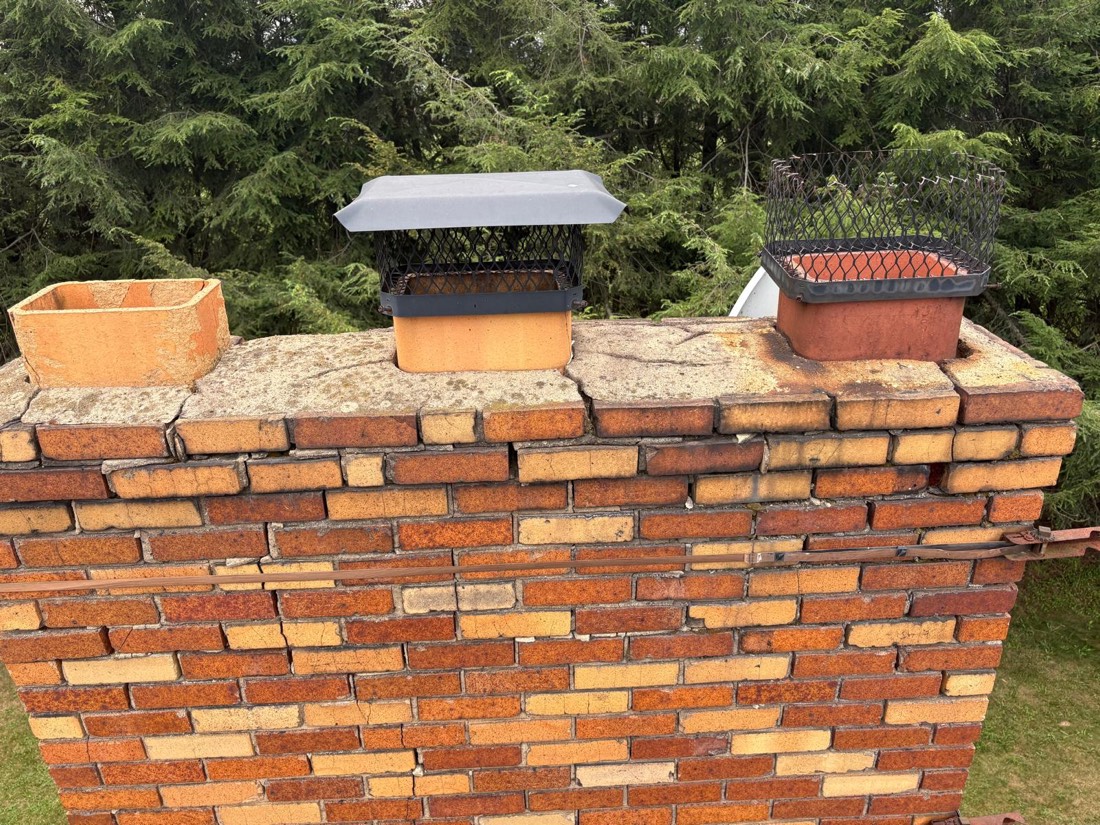
3. The flashing has failed
Flashing is the metal seal where the chimney passes through the roof. It is the single most common leak point on any chimney, and it is where roofers and chimney crews both tend to point at each other.
Old flashing lifts, rusts or was tarred over by someone in a hurry. Tar is a temporary fix that always fails, usually within a couple of years.
How to check: stains on the ceiling right where the chimney comes through, rather than in the firebox, usually mean flashing.
4. The brick itself is soaking up water
Masonry is porous. Old brick with eroded mortar acts like a sponge in a driving rain, holding water that then freezes and breaks the brick apart.
The tell is white efflorescence staining on the outside and damp interior walls without any obvious crack anywhere. The fix is repointing the joints and sealing the masonry with a breathable waterproofer, which lets trapped moisture escape while keeping rain out.
Do not let anyone seal a chimney with a non breathable coating. It traps water inside the brick and accelerates the damage.
5. It is not a leak at all, it is condensation
Sometimes there is no water coming in from outside. An oversized or unlined flue lets exhaust gases cool and condense on the way up, and that moisture runs back down the inside.
The giveaway is dampness with no correlation to rainfall, often with a strong smoky smell. The fix here is a correctly sized liner, not sealant.
How to narrow it down yourself
Note where the water shows up and when. Water in the firebox during rain points at the cap or crown. Stains on the ceiling where the chimney meets the roof point at flashing. Damp walls with white staining and no obvious crack point at the masonry itself. Dampness with no rain points at condensation.
That is usually enough to know which conversation you are having before anyone quotes you anything.
Why chasing the wrong cause costs more
We get called regularly to houses that have had the roof redone twice for a leak that was always the crown. The roof work was not wrong exactly, it just was not the problem.
One inspection with a camera and photos settles it. If someone cannot show you a picture of the thing they want to charge you to fix, get a second opinion.
Not sure what you are looking at?
Text us a photo of your chimney and we will tell you what we see. Free inspections across Pittsburgh, Peters Township, Cranberry Township and Moon Township.
Call (412) 202-3755